
Degrees
Graduate job-ready
The distinction between the roles of colleges and universities is not as clear as it once was. Today we live in a society where applied skills and theoretical knowledge must be integrated. Employers are looking for doers, thinkers, creators and leaders – all in one person.
Georgian has many programs and services in place to ensure you succeed.
Why earn a degree at Georgian?
Highlights
- Further your education and your career with degree studies at Georgian
- Earn a degree directly from Georgian, with options in business administration, interior design, nursing and polices studies
- Lakehead-Georgian programs give you the opportunity to graduate with a diploma and degree in just four years
- Take advantage of articulation agreements with other postsecondary institutions across the world
- Some degrees offer flexible study options including part-time and online delivery
- If you’ve already attended college or university, receive transfer credit toward a degree program at Georgian
Programs
Degrees (4 years)
- Bachelor of Engineering (Electrical) Degree with Electrical Engineering Technology Advanced Diploma
- Honours Bachelor of Arts and Science – Environmental Sustainability (Specialization in Ecosystem Management) Degree with Environmental Technician Diploma
- Honours Bachelor of Business Administration (Automotive Management) (Co-op)
- Honours Bachelor of Business Administration (Management and Leadership) (Co-op)
- Honours Bachelor of Counselling Psychology
- Honours Bachelor of Interior Design (Co-op)
- Honours Bachelor of Police Studies (Co-op)
- Honours Bachelor of Science – Applied Life Sciences (Specialization in Biomedical Techniques) Degree with Biotechnology-Health Diploma
- Honours Bachelor of Science in Computer Science Degree with Computer Programming Diploma
- Honours Bachelor of Science – Nursing
- Honours Bachelor of Science – Nursing RPN to BScN Advanced Standing Pathway (Bridge)

Not sure about your next career move?
Find the career that’s right for you, and the Georgian program that will take you there.

The student-centred, collaborative, smaller classes at Georgian modelled my current work environment. Georgian College gave me the tools and knowledge to work collaboratively within an interdisciplinary team.—Courtney Houldsworth, graduate of the Bachelor of Science in Nursing (BScN) Collaborative program
University Partnership Centre
Earn your degree at Georgian College
We understand the world is changing. We know that students like you are looking for increasingly flexible options. That’s why we provide our own Georgian degree programs in business administration, interior design and polices studies.
Other university partner programs
Georgian also works with university partners to develop joint degree-diploma programs, and seamless and effective pathways for students. We are proud to partner with Central Michigan University, Lakehead University, Ontario Tech University and York University to provide these innovative postsecondary opportunities.
- Central Michigan University: Master of Arts degree in Education (Community College Concentration)
- Ontario Tech University: RPN-BScN Degree Completion
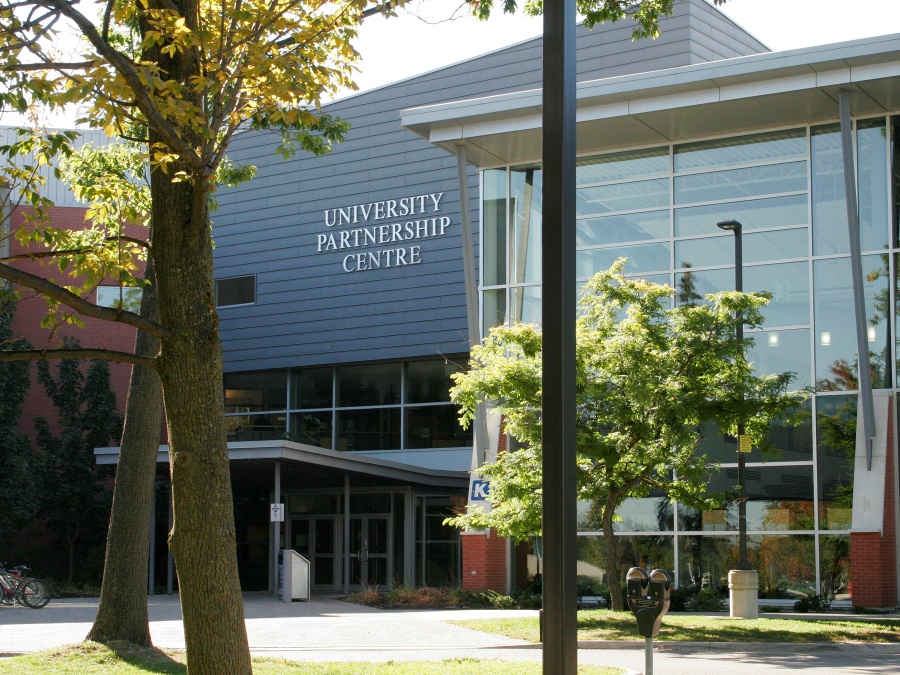
Lakehead-Georgian degree-diploma programs
Earn a diploma and degree in just four years
Studying at Lakehead-Georgian isn’t a typical experience. You get the best of both worlds!
Our students will graduate with credentials from both Lakehead University and Georgian College in just four years. The first two years are delivered at Georgian’s Barrie Campus, and the final two years at Lakehead’s Orillia Campus.
Learn more about the Lakehead-Georgian advantage.
Credit transfer and articulation agreements
Georgian partners with select universities to offer a wide range of transfer credit options and articulation agreements with institutions around the world.
Want to further your education?
Use our search tool to find out how you can use your Georgian credential(s) to further your education.
Already attended a postsecondary institution?
Use our transfer equivalency tool to explore how you might be eligible for transfer credit towards a program at Georgian.

After completing my diploma at Georgian, I wanted to continue my education abroad and obtain a degree in marketing. An articulation agreement between a Georgian and the University of Glamorgan in Wales, UK, provided me with this opportunity. Not only did I receive a great education experience, I was able to immerse myself in Welsh culture while meeting students and faculty form all over the world. I would go again in a heartbeat. Thank you, Georgian College, for making this partnership possible!—Robyn Glassier, graduate of Georgian’s Business Administration – Marketing program
Connect with us
Attend a Get to Know Georgian
virtual info. session on May 14.
Register for an upcoming session.
Take a guided, in-person tour
of our campuses.
Book a campus tour.
Book a phone appointment
with a recruitment specialist.
Connect with a recruiter.

Join our email list for event updates, contest information and more.
Sign up for Georgian updates.
Continuing education
Take a single course, or work towards a diploma, certificate or degree—all at a pace that’s right for you. Part-time courses are offered at night or on weekends, or you can opt for online learning.

Looking for credit?
Select from a range of programs, register class-by-class and study on your time. Georgian offers degrees, certificates, diplomas, advanced diplomas and graduate certificates.

Professional development
Looking to advance your career, meet an industry requirement or learn a new skill? We offer a variety of evening and weekend courses to support your ongoing growth.

Study online
Take a course or program online instead as an alternative to in-class. Online courses for a range of subjects are available to part-time and full-time students through OntarioLearn.